Looking to create a content strategy for your business? Or improve an existing one? Content mapping is a great place to start.
Why?
Done right, it’s helps you more efficiently organize the content you need to support your leads, prospects, and customers as they interact with your brand. That way, you know what you have, what you need, and where it should all go on your site.
With a content map, your content marketing efforts are more targeted. And (hopefully) more likely to pay off.
In this guide, we’ll explain what content mapping is. And walk you through creating your very own content map.
What Is Content Mapping?
Content mapping is the process of mapping existing and future content to align with the different stages of the customer journey.
There are multiple ways of thinking about the journey customers take from learning about a brand to finally making a purchase. But it’s usually divided into three distinct stages:
- Awareness: During this stage, people become aware that they have a specific issue that needs to be solved. For example, they might realize that they need to fix the roof on their house.
- Consideration: In the consideration stage, people are actively researching different solutions to their problem. For instance, researching different roof repair companies.
- Decision: In this last stage of the process, they decide whether to make a purchase. And from whom. For example, calling a roof repair company and scheduling a roof inspection.
Benefits of Content Mapping
Content mapping can help you:
Understand the Customer Journey
Creating a content map requires you to get familiar with the experiences your prospects and customers go through when they're getting to know your brand.
You'll identify their pain points and priorities, empathize with their mindset, get familiar with their questions, and get to know their needs.
This will not only help you map content in a way that better supports them, it will guide all your content creation and deployment efforts.
Ensure You Have Content for Every Stage
Content mapping ensures that your pieces are interdependent, complementing each other and reinforcing key value props, but also answering the questions and considerations the prospect has at each particular stage.
For example, in awareness, you're probably reflecting their problem back to themselves—helping them understand it better, motivating them to address it, and giving them hope that there are solutions available.
In the consideration stage, you're showing them more of what's possible, and helping them to get to know their options.
In the decision stage, you're giving them info they need to feel confident (comparison points, social proof) and letting them know why they should choose to buy from YOU.
Uncover Content Gaps
By mapping your existing content, you’ll naturally uncover content gaps—topics you haven’t covered in your content yet but that would be highly beneficial to your target audience.
You can then work on creating content around these topics to provide potential customers with all the information they might need to make a purchase.
How to Get Started with Content Mapping
Follow these steps to get started with content mapping:
- Identify your target audience. Get clear on who you’re looking to reach through content.
- Define the customer journey. Identify the stages customers go through before making a purchase. And the questions, feelings, and needs they have at each stage.
- Map existing content. Create a list of all your existing content. Map each content piece to a stage of the customer journey.
- Find content gaps. Identify topics you haven’t covered but are crucial for helping potential customers buy from your business
- Create a content plan. Turn the topics you’ve identified as gaps into a prioritized content plan. Use it to streamline content creation.
Let’s go over each step in more detail.
1. Identify Your Target Audience
Before you can create a content map, you need to identify your target audience. In other words, you need to understand who you want to reach with your content.
In marketing, this is accomplished by creating a persona—a fictional representation of a person who fits your target market.
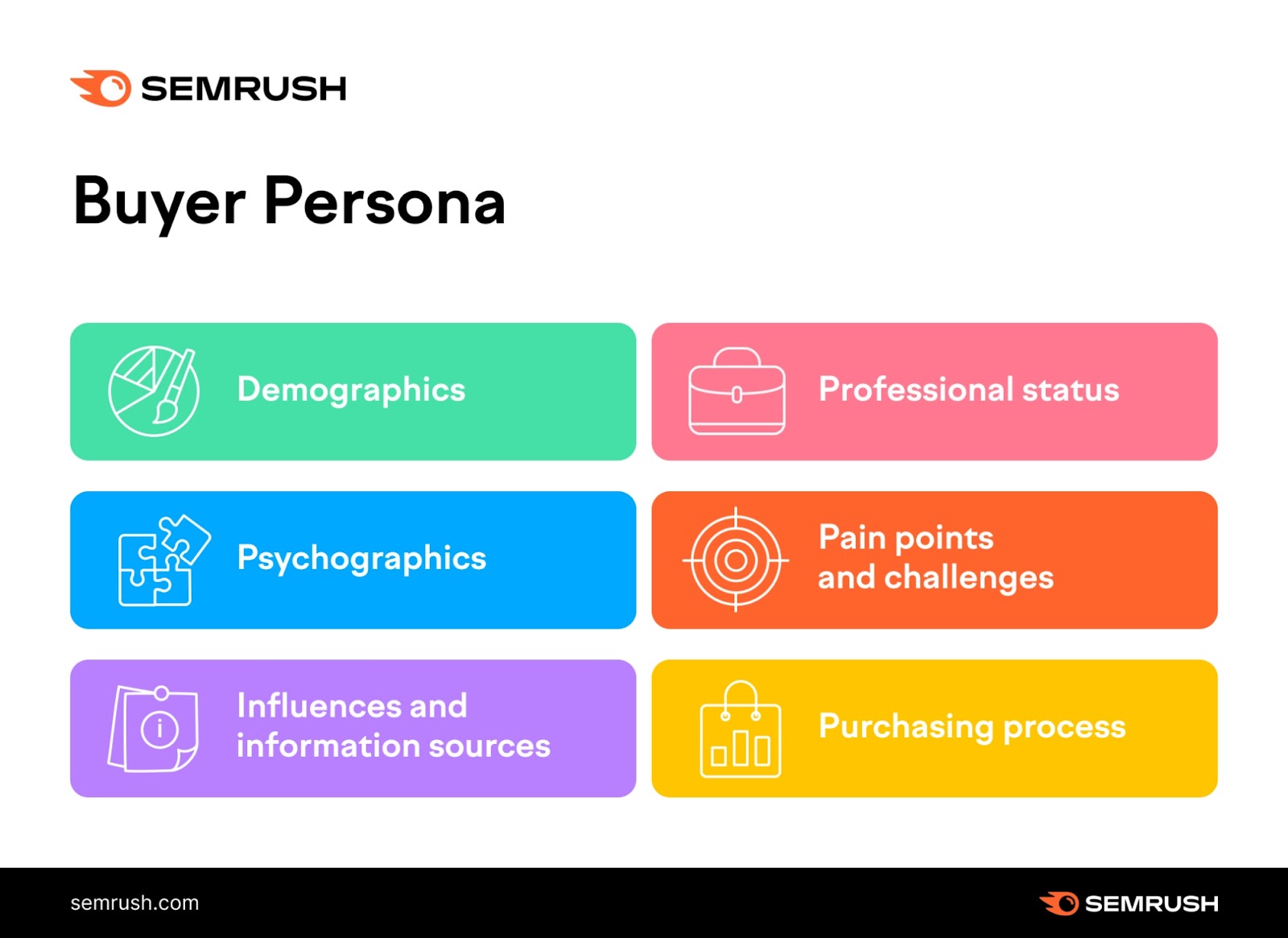
Buyer Persona vs. Reader Persona
When defining your target audience, it’s important to differentiate between buyer personas and reader personas. Depending on your business and your content strategy, these might be two completely different people.
For example, let’s say your company sells a software solution designed to help sales teams improve their productivity and close more sales.
The person who will ultimately make a decision whether to purchase your software is the VP of Sales at a target company.
But, based on market research, you understand that you need a company’s sales reps to experience the benefits of using your software first-hand. So that they could then influence the VP of Sales to make the purchase.
Because of this, you want to reach sales reps with your content. And educate them on the benefits of your software solution.
In this case, your buyer persona would be the VP of Sales. But your reader persona would be a sales rep.
B2C vs. B2B Personas
The goal of a persona is to arm your creative team with all the information they need to craft content that will compel the person represented by that persona.
What information you include in the persona will depend on who your audience is, what your product is, and what kind of brand you have.
There’s a big difference in personas created for business-to-consumer (B2C) brands and those created for business-to-business (B2B) brands.
For example, if you have a B2C ecommerce brand, useful information on your target audience might include age, gender, income level, or interests. But if you have a business that sells to other businesses, you might want to focus on details such as industry, company size, and job title in your personas.
| Type of business | Business-to-consumer (B2C) | Business-to-business (B2B) |
| Buyer persona attributes | Age, gender, income level, interests | Industry, company size, job title |
Market Research
A common mistake marketers make: thinking they know everything there is to know about their target audience.
One of the fastest ways to find out how much you don’t know, and truly get to know your potential customers, is to talk to them.
Here are a few ways you can do that:
- Conduct interviews. Interview people who fit your target audience to find out what problems they face, what topics they’re interested in, and what they’re looking for in a solution like yours
- Organize a focus group. Hold a focus group with individuals who fit your target audience description. Ask them those same questions and let them talk among themselves. Note the insights that seem to resonate most.
- Check out online discussions. Read through online discussions related to your industry to learn what potential customers are thinking and talking about.
- Talk to customer-facing teams. Get in touch with your company’s sales and customer support representatives. Find out what kind of concerns prospects and customers have. And what questions they are asking.
- Survey existing customers. If your business already has customers in the market you’re thinking about targeting, send them a survey via email. Learn more about them and their experience with your products or services.
2. Define the Customer Journey
The next step is to define the specific stages your customers go through before making a purchase from your business.
For each stage, you’ll want to list:
- The customer’s situation: What issues or pain points are they dealing with? What kind of resources do they have at their disposal?
- The questions customers have: What answers are they actively looking for? What answers will they need but haven't thought to ask about yet?
- The most suitable types of content: Based on the customer’s situation and the questions they have, which types of content would be the best to deliver the information they need?
Keeping up with our earlier example, here’s how this might look like at each stage of the customer journey:
Awareness
The target customer is dealing with a leaking roof. At this moment, they’re looking to learn more about roof leaks, why they happen, and how to fix them.
They might be asking their neighbors, reading online articles, or posting questions on forums.
Some questions they might have at this stage include:
- How do I fix a leaking roof?
- How to patch a roof leak?
- How to prevent roof leaks?
- How much does a roof inspection cost?
Some suitable types of content to create in this case might be educational blog posts or videos answering your potential customer’s questions. This might be a how-to-guide for tarping your roof or step-by-step instructions for starting a claim with their insurance company.
Consideration
At this stage, a person is considering options for fixing their leaking roof. Perhaps they’re considering fixing it themselves. Or they’re researching different roof repair companies.
Questions they’re looking to find answers to include:
- Should I fix a roof leak myself?
- What to look for in a roof repair company?
At this stage, relevant content might include detailed guides to help them choose the right solution to their problem. In our example, that would involve helping them understand that it’s best to hire a professional to fix their roof.
Decision
Once they reach the decision stage, people are ready to make a purchase. All they need is a little nudge to go ahead and do it.
Some questions they might need answered at this stage include:
- What makes your roof repair company better than other similar companies in my area?
- How much do your services cost?
- How long is it going to take you to fix my roof?
There are lots of different types of content that can help in the decision stage. But one frequently used option is a landing page where you answer any questions that might be preventing people from buying from your company.
3. Map Existing Content to Stages of the Customer Journey
Once you’ve defined the stages your customers go through before making a purchase, it’s time to map your existing content to each stage.
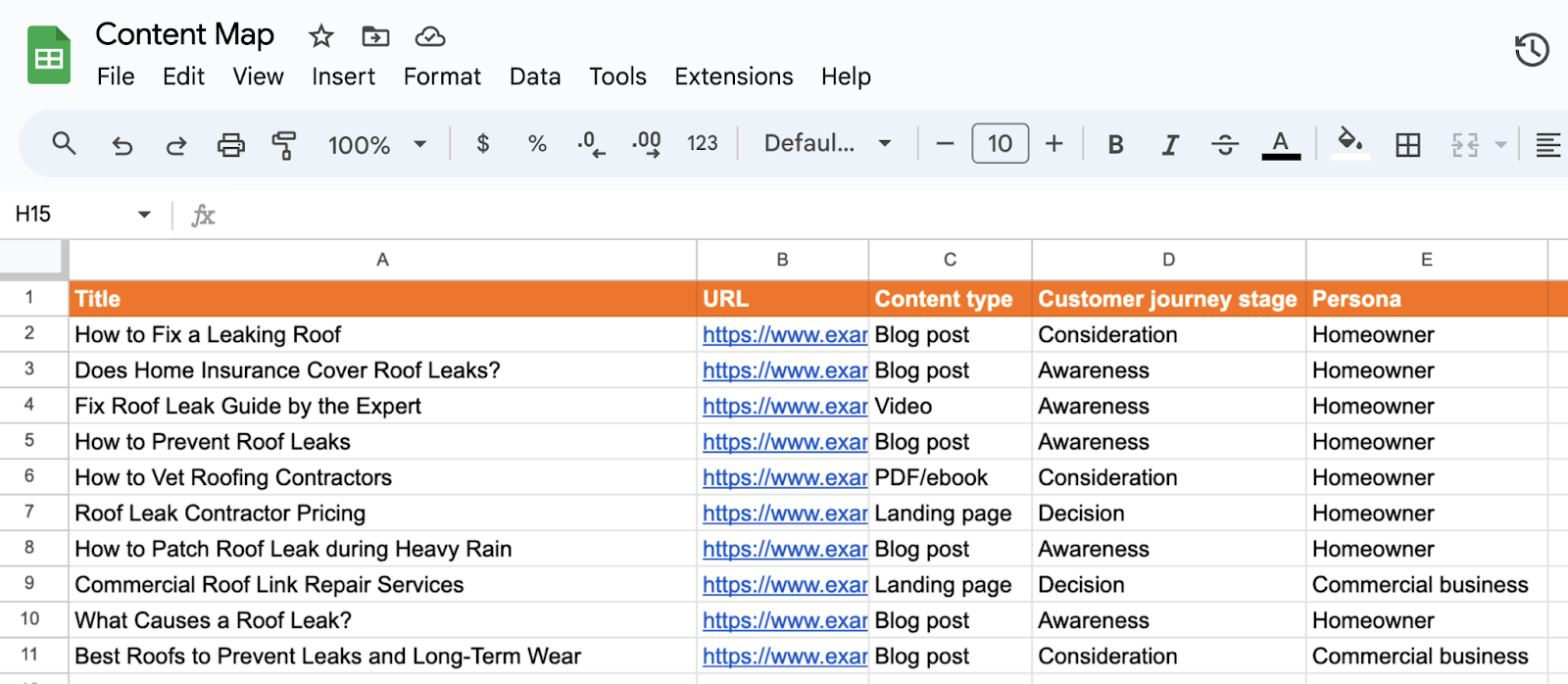
To do this, create a spreadsheet. Make a row for each piece of existing content. Make sure to note the following for each piece of content:
- The title
- The link
- The type of content (e.g., blog post, ebook, etc.)
- The stage of the customer journey it’s intended for
- The persona it’s targeting
This will serve as your initial content map.
Here’s how it might look:
4. Find Content Gaps
Now that you have your content map, use it to uncover any gaps in your existing content.
Sort your content map by customer journey stage and then review all the content pieces you have for each stage.
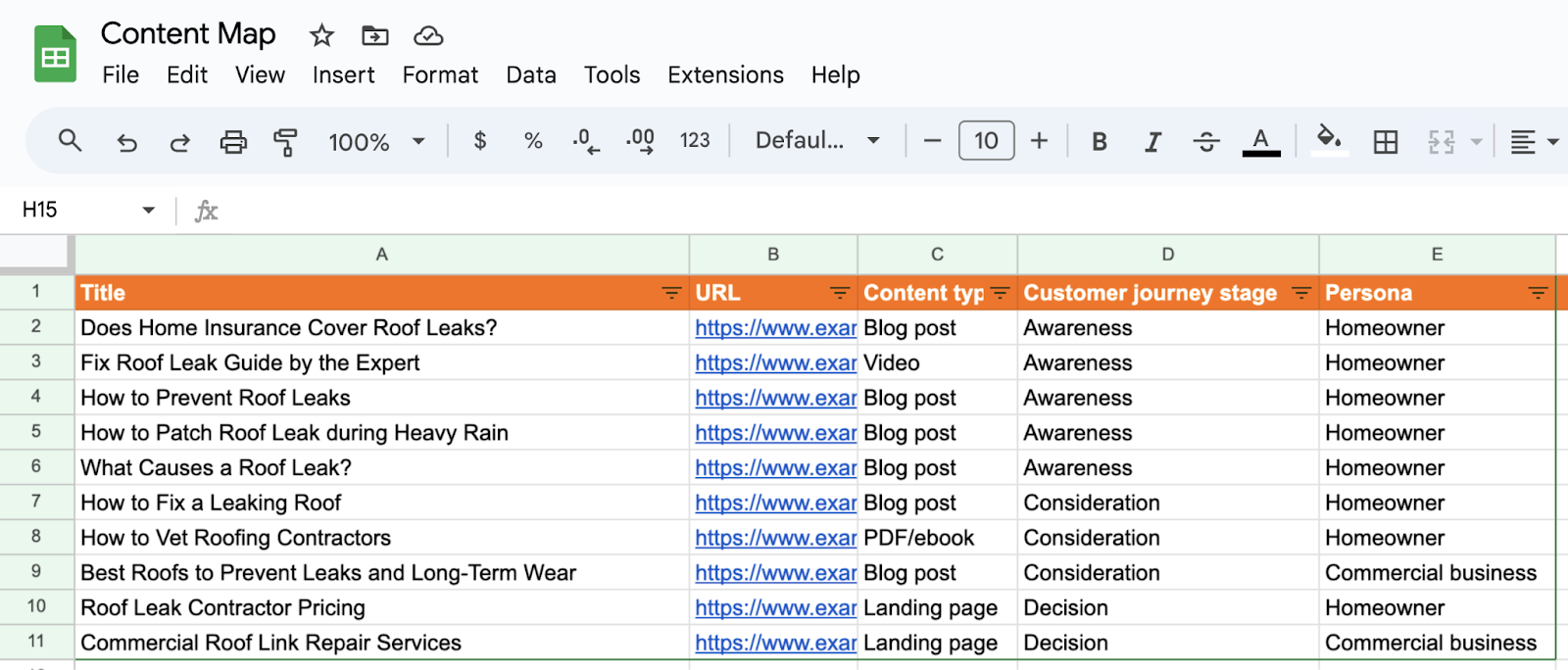
Are there any questions customers might have at a particular stage that your content hasn’t answered? These are gaps in your content that you should look to fill as soon as possible.
Some questions might be obvious to you based on your previous customer research. But Semrush Keyword Magic Tool can help you uncover questions you haven’t thought about.
Here’s how:
Log in to Semrush. In the left-hand menu, click “Keyword Magic Tool” under “KEYWORD RESEARCH.”
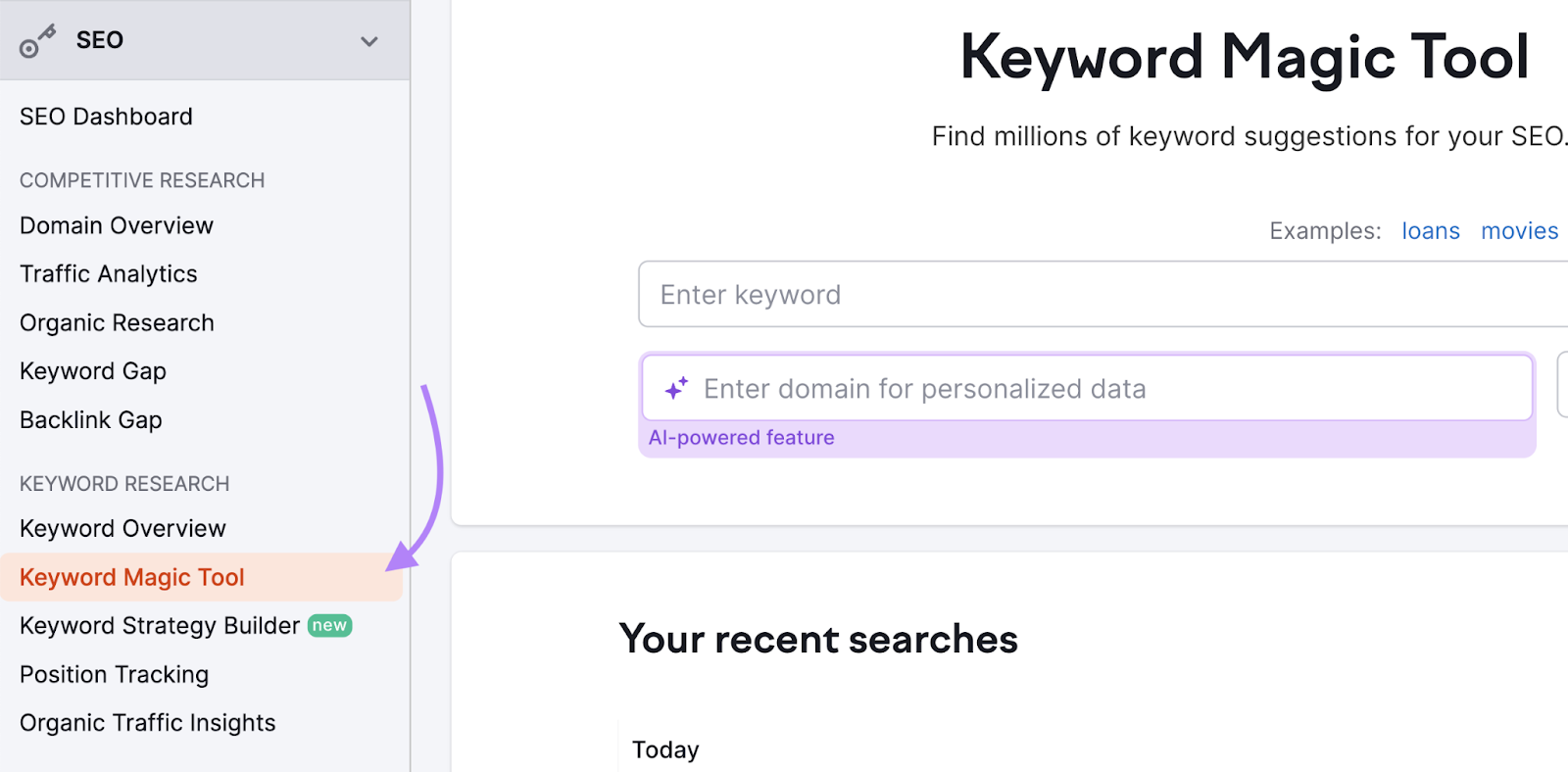
Start by typing in a keyword closely related to your business and click on “Search.”
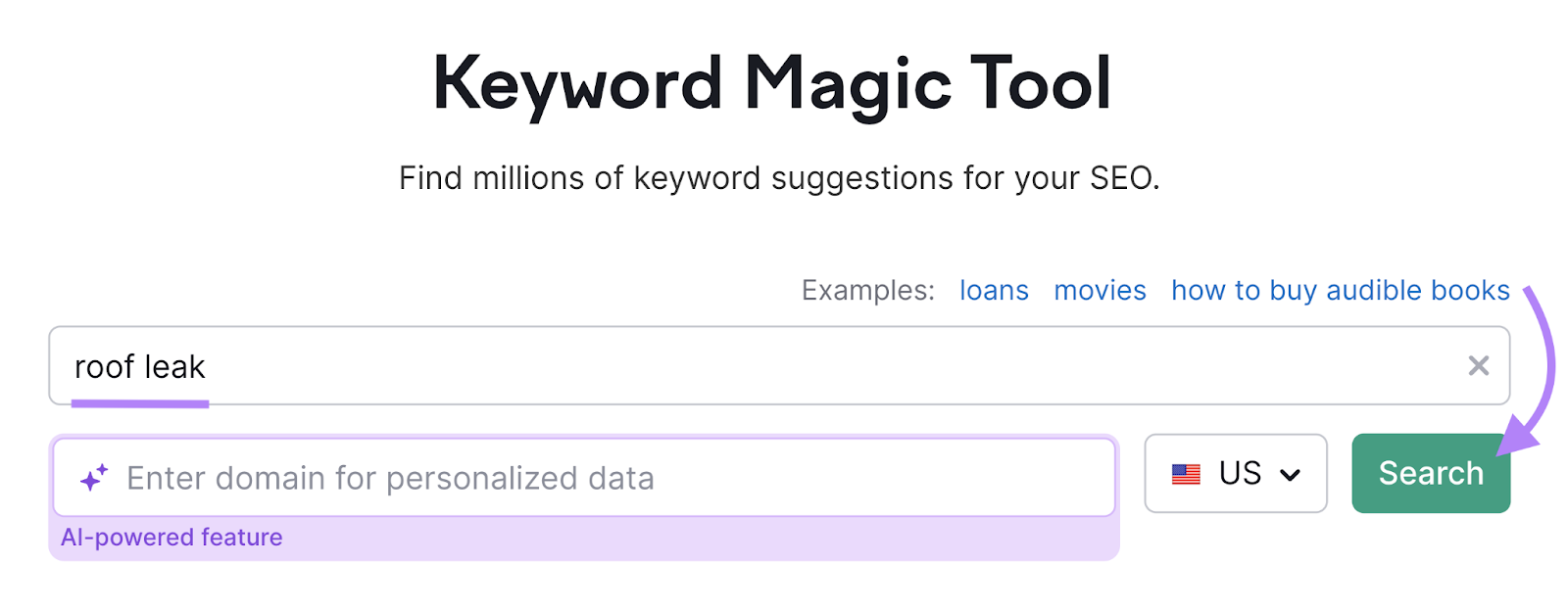
The tool will generate a list of keywords related to your topic.
From here, click on the “Questions” tab. You’ll see a list of questions related to your topic. Sort these by search volume to understand which questions get asked most frequently.

Another way to find content gaps is to look at your competitors’ content. See if they’ve covered any important topics that you haven’t. You can do this manually. Or speed up the process by using Semrush’s Keyword Gap.
Here’s how:
Log in to Semrush. Click “Keyword Gap” in the left-hand menu under “COMPETITIVE RESEARCH.”
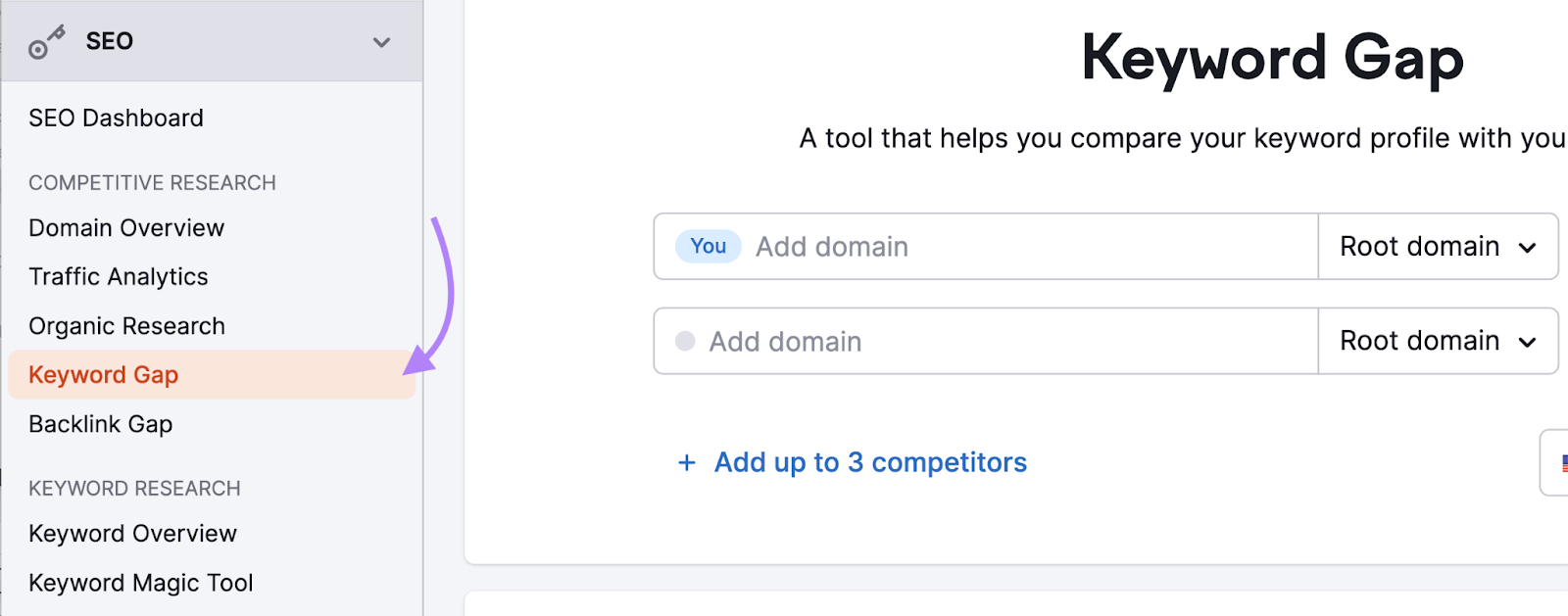
Enter your domain and the domains of up to four competitors. Click “Compare.”
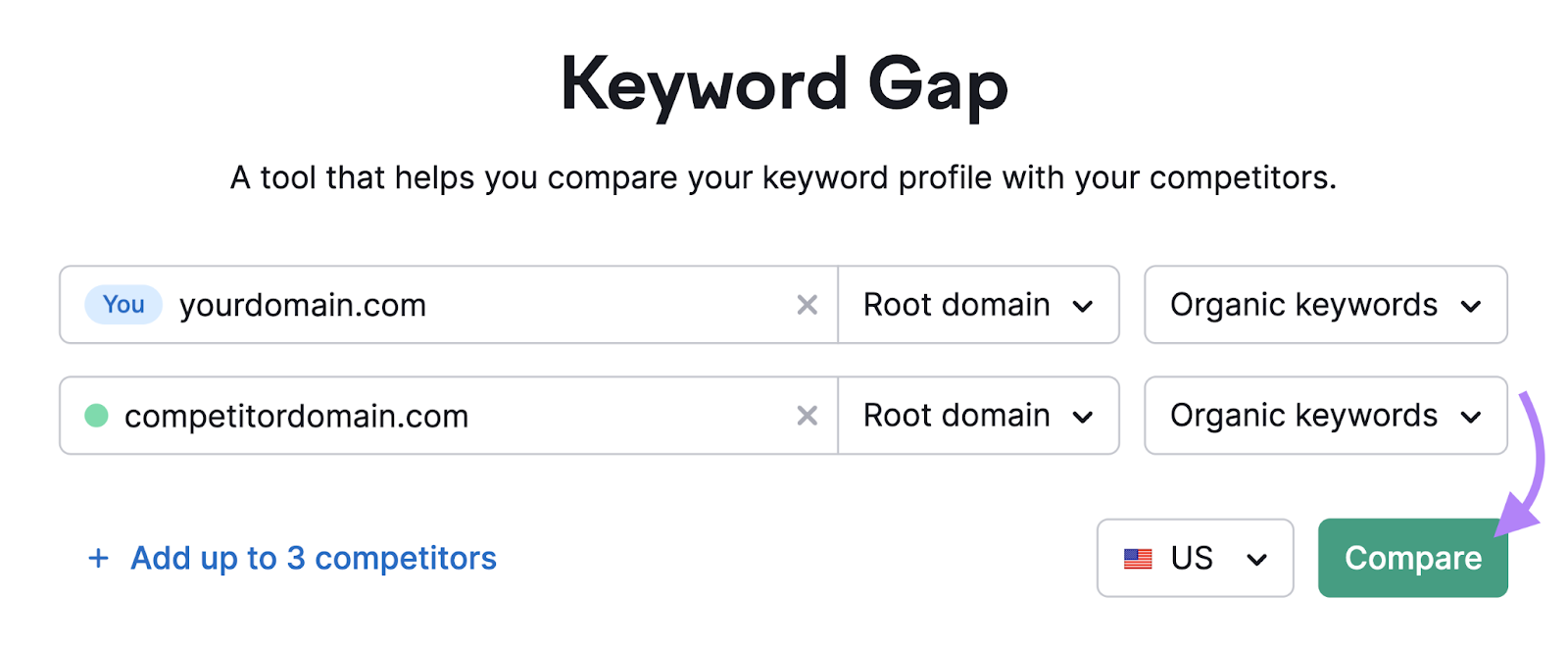
The tool will generate a detailed report showing all the keywords the entered domains rank for.
To see all the keywords competing domains rank for (but yours doesn’t), scroll down to the “All keyword details for:” section.
Click the “Untapped” tab.

Add these keywords to a keyword list in Semrush. Or export them to a .CSV or Excel file. That way, you can create content around them, answering your potential customers’ questions.
5. Create a Content Plan
Your content gap analysis from the previous step likely provided you with a lot of topics to cover.
The next step is prioritizing them.
Here are a few questions that can help you decide which topics should take priority:
- Are there stages of the customer journey that are underserved?
- Which personas are underserved?
- If personas are equally well-served, is there one associated with a higher ROI that should get a larger investment of content?
- Are there channels that are underutilized?
- Are there asset types that are underutilized?
- Are there asset types that should be prioritized based on conversion or low cost to make?
Put some thought into the above questions and use the answers to guide your content plan.
Ensure Content Marketing Success with Content Mapping
Content mapping is a crucial step in creating an effective content strategy.
Use our guide, along with tools like Semrush’s Keyword Gap and keyword research tool, to map content and create a plan for addressing content gaps.